
When Your Home No Longer Fits Your Life
How changing priorities can reshape what you need from home
A home can stop fitting your life even when nothing is wrong with it. Changes in space needs, maintenance, location, finances, and long-term priorities can all be signs that it is worth reassessing whether your current home still works for the years ahead.
One of the things I’ve learned over the years is that people don’t always decide to move because something is wrong with their house.

Sometimes the house is perfectly fine. It’s just that their lives have changed.
Maybe the children have moved out, and there are rooms you rarely use anymore. Maybe you’re working from home and the space that once worked well for your family no longer fits the way you spend your days. Or perhaps you’re beginning to think more seriously about what you want the next ten or fifteen years to look like.
None of those changes automatically means it is time to move. But they can be a good reason to take a fresh look at what you need from your home now.
A Home Can Work Well for One Stage of Life and Less Well for Another
We tend to think about a home in terms of the features it has: bedrooms, bathrooms, square footage, yard, storage, location.
But the usefulness of those features changes over time.
A large yard may have been exactly what you wanted when children were young. Years later, the maintenance may feel more like an obligation than a benefit. Extra bedrooms may once have been essential and now sit mostly unused. A long commute may have been manageable when work and family routines looked different, but today it may feel like time you would rather spend somewhere else.
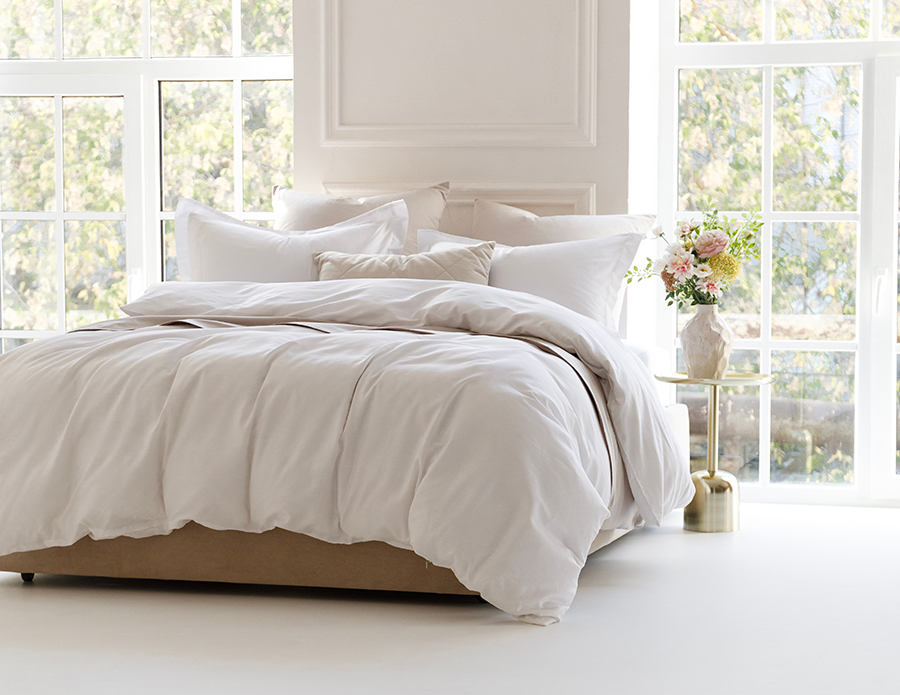
The house has not necessarily become worse. Your priorities have simply changed.
That distinction matters because it takes some of the pressure out of the decision. You do not need to dislike your home to acknowledge that another one might work better for the life you have now.
Pay Attention to the Workarounds
One of the easiest ways to tell whether a home still fits is to notice how often you are working around it.
Maybe you avoid using one floor because the stairs have become inconvenient. Maybe you are constantly reorganizing because storage no longer works well. Maybe you spend more time maintaining the property than you want to. Or perhaps you have gradually changed your routines because the location makes certain things harder than they need to be.
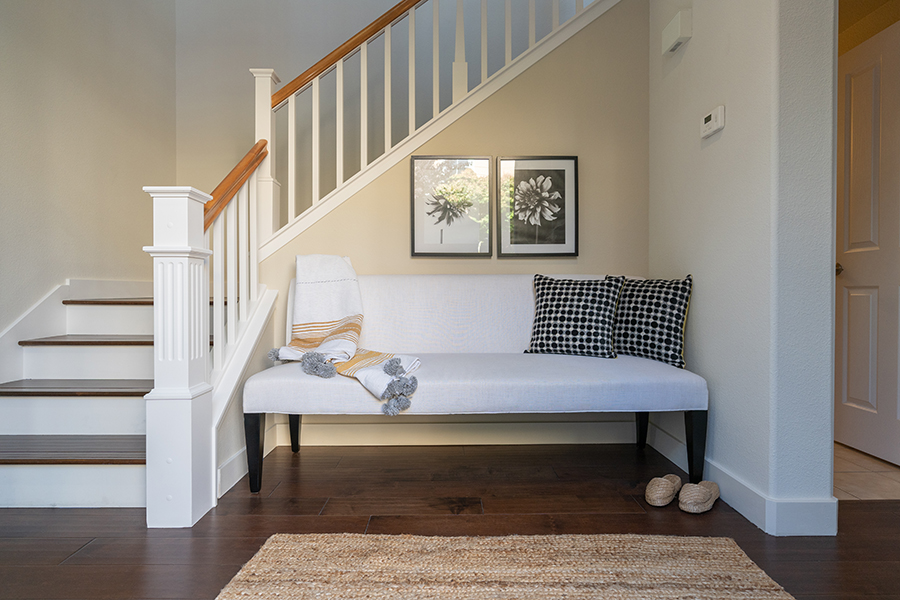
Most of us are remarkably good at adapting. We move furniture, use rooms differently, postpone repairs, accept longer drives, and tell ourselves that something is only a minor inconvenience.
And sometimes it is.
But when enough small adjustments accumulate, they can tell you something useful about how well the home is supporting your daily life.
If staying where you are still appeals to you, it may also be worth considering whether some thoughtful changes could make the house work better. The AARP HomeFit Guide offers practical ideas for making a home safer, more comfortable, and more functional over time.
The Question Is Bigger Than Square Footage
When people begin thinking about a move, the first instinct is often to focus on size.
Do I need less space? More space? A first-floor primary suite? A smaller yard?
Those are important questions, but they are only part of the decision.
Location may matter more now than it did when you bought your current home. You may want to be closer to family, healthcare, restaurants, trails, or the places where you spend your free time. You may want a neighborhood where you can walk more and drive less. Or you may be ready for more privacy and fewer nearby neighbors.
Maintenance matters too.
A smaller home is not automatically easier to care for, and a newer home is not necessarily maintenance-free. What matters is understanding how much responsibility you want to take on and what kind of property supports that.
If part of your thinking involves a smaller footprint or less maintenance, our article Downsizing Without Compromising looks more closely at how to approach that transition without assuming that moving to a smaller home means giving up the things you value.
The goal is not simply to find a different house. It is to understand what you would want a different house to make easier.
Cost Is Part of the Conversation
This is especially important in the current market.
Mortgage rates and the overall cost of homeownership have made many homeowners understandably reluctant to move unless there is a compelling reason. Staying in a home with a low mortgage rate can have real financial advantages, and moving simply because a house is no longer perfect may not make sense.
I think that is a healthy way to look at it.
Buying or selling a home should make sense for both your life and your finances. Sometimes staying where you are is the better decision. Other times, the value of a different location, lower maintenance, a better layout, or a home that fits your long-term plans may outweigh some of the financial reasons to stay.
If mortgage rates are part of that calculation, Freddie Mac’s Primary Mortgage Market Survey provides a current national snapshot of average mortgage rates.
The important thing is to look at the whole picture rather than allowing one factor to make the decision for you.
Think About the Next Ten Years, Not Just the Next Move
Toward the end of the year, many people naturally start thinking about what they want to change.
When it comes to your home, I think the more useful question is not, “Should I move next year?”
It is, “How well is this home likely to work for the life I want over the next ten years?”
Do you still use the space the way you once did? Are you comfortable with the maintenance it requires? Does the location continue to suit your routines? Are there things you want to do more often that your current home or community makes difficult?
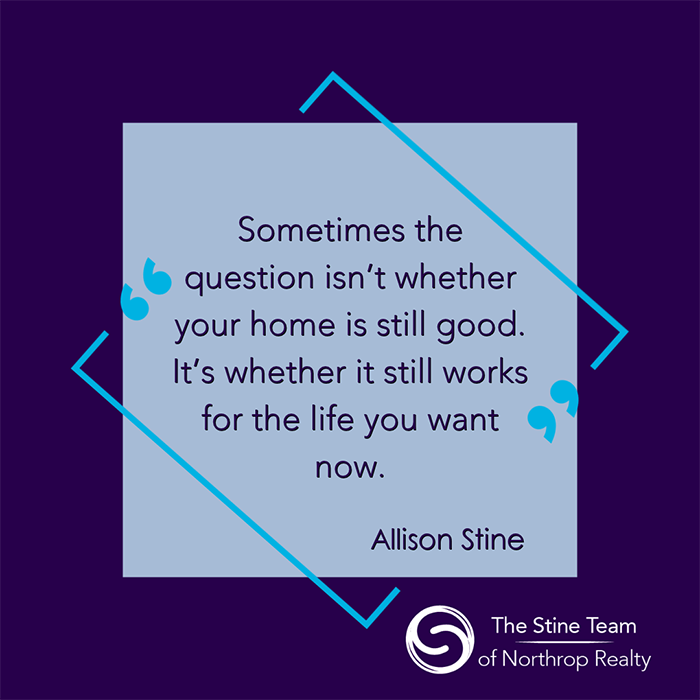
You may think through those questions and realize that you are perfectly happy where you are.
That is useful information.
Or you may realize that the home you have been adapting to for years no longer makes as much sense as it once did.
That is useful information, too.
You Don’t Have to Wait Until a Move Becomes Urgent
One of the advantages of thinking about these questions early is that you have options.
You can take time to understand what your current home may be worth, explore different communities, consider whether downsizing makes sense, or simply learn what kinds of homes are available without feeling pressure to make an immediate decision.
That is very different from having to make a move because circumstances suddenly require it.
There is value in understanding your options while you still have the freedom to decide what comes next.
If you have been wondering whether your current home still makes sense for the years ahead, I’m always happy to talk it through with you. Sometimes that conversation leads to a move.
And sometimes it confirms that home is still exactly where you want to be.

Categories
Recent Posts










"My job is to find and attract mastery-based agents to the office, protect the culture, and make sure everyone is happy! "